
When guests attend a wedding, they usually notice the visible moments first — the couple’s entrance, speeches, music, cake cutting, entertainment, dancing and the person holding the microphone.
What they rarely see is the amount of preparation, communication and coordination required to make those moments happen smoothly.
For MC Desmond Oliveira, wedding hosting is not limited to announcing what comes next. His approach brings together wedding planning coordination, structured information gathering, vendor communication, venue awareness, programme management, wedding officiating, crowd engagement and real-time decision-making.
That broader system is what helps transform a wedding programme from a list of activities into a celebration that feels connected, organised and well managed.
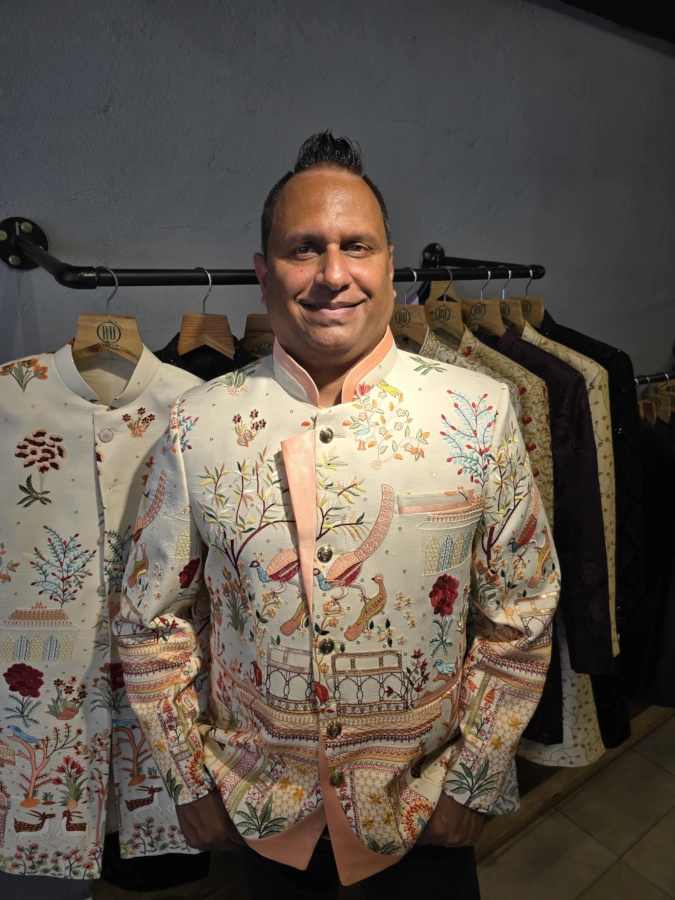
More Than a Wedding Emcee
A modern wedding can involve planners, venue teams, DJs, bands, photographers, videographers, decorators, caterers, sound and lighting teams, entertainers, ushers and family members with specific responsibilities.
For an MC, understanding only the programme is not always enough.
The person controlling the live flow may also need to know:
- what is happening next;
- who is responsible;
- whether vendors are ready;
- whether the couple and guests are ready; and
- how to adapt if something unexpected happens.
This is where Desmond’s approach becomes more like a wedding coordination and execution system than stage hosting alone.
The Wedding Responsibilities Form
One important part of Desmond’s process is his Wedding Responsibilities Form.
Rather than functioning as a basic questionnaire, it helps gather wedding information in a structured way.
Couples can organise programme details, vendor responsibilities, important moments and other requirements before the event.
The purpose is to create a clearer wedding brief and establish who is responsible for what.
That can reduce confusion later and help create a more organised transition from planning to execution.
Point-to-Point Wedding Guidance
Wedding information can easily become scattered across WhatsApp messages, emails, phone calls and conversations with multiple vendors.
Desmond’s structured approach is designed to collect important details systematically and, where appropriate, remotely.
This does not mean meetings are unnecessary.
The advantage is that couples can provide important information through a guided process instead of relying entirely on repeated conversations.
The result is a clearer journey from:
Information → Planning → Coordination → Wedding-Day Execution
Where Wedding Planning Meets Hosting
One of the strongest parts of Desmond’s approach is the connection between planning and live hosting.
Consider a cake-cutting moment.
From a guest’s perspective, the MC simply announces it.
Behind the scenes, the photographer and videographer may need to be ready, the DJ may need a particular track, the couple needs to be in position and the venue team may need to prepare the cake or champagne.
A schedule might simply say:
9:30 PM – Cake Cutting
But professional execution requires understanding everything connected to that moment.
This is where wedding planning-to-hosting integration becomes valuable.
Because Desmond works across emceeing, wedding planning coordination and officiating, he approaches the programme from more than one perspective.
Vendor-to-Emcee Coordination
An emcee does not work in isolation.
The live programme may depend on the wedding planner, venue team, DJ, band, photographer, videographer, caterer, decorator, sound team, lighting team and other suppliers.
A photographer may need advance notice before an important moment.
The DJ needs cues.
The band may need to know whether the programme is running late.
The caterer may need to adjust dinner timing.
This makes vendor-to-emcee coordination an important part of Desmond’s working method.
The objective is not to take over another vendor’s role.
It is to ensure that the right people receive the right information at the right time.
Creating a Well-Oiled Wedding Programme
A wedding contains many moving parts:
Couple + Guests + Vendors + Venue + Programme + Entertainment + Timing + Communication
When those parts work together, the celebration feels effortless.
But smooth execution rarely happens by accident.
A delayed speech may affect entertainment.
Entertainment may affect dinner.
Dinner may affect the first dance.
The role of live coordination is therefore not simply to follow a timeline rigidly.
It is to understand how one element affects another and keep the programme moving intelligently.
This is the idea behind a well-oiled wedding programme.
Why Venue Awareness Matters
A professional MC does not only see the stage.
Before the event, Desmond may familiarise himself with important areas of the venue, such as:
- stage and entertainment areas;
- guest movement and access points;
- vendor locations;
- seating arrangements;
- washrooms;
- backup power arrangements; and
- key venue personnel.
This does not mean the MC becomes a venue manager, electrician or technician.
The advantage is preventive awareness.
If something happens, knowing who is responsible and how to reach them can save valuable time.
The MC as a Communication Hub
During a large wedding, locating a specific vendor can sometimes be difficult.
The photographer may be outside.
The planner may be speaking with family.
The venue manager may be in another section.
Maintaining relevant vendor contact information helps create a practical wedding-day communication network.
The important question becomes:
Who needs to do what, when and where?
The MC does not personally solve every operational issue.
Instead, he can help connect the requirement with the person responsible for resolving it.
Contingency Management: Keeping the Wedding Moving
Weddings do not always follow the original plan.
Weather changes.
Guests arrive late.
Equipment can fail.
Props break.
Programme elements run early or late.
The objective is not to pretend problems never happen.
It is to solve them without allowing the problem to dominate the wedding.
A useful principle is:
Solve the problem without allowing the problem to become the wedding.
That is the essence of wedding contingency management.
A Real Example: Preserving the Champagne Moment
At one wedding, a champagne bottle was accidentally broken during the cake-cutting sequence and there was no immediate replacement.
Instead of stopping the programme, Desmond coordinated with the bar and ushers to arrange an alternative presentation.
The couple’s moment continued and the photography and videography teams could still capture the intended visual sequence.
The important lesson was not the replacement itself.
It was continuity under pressure.
The problem stayed in the background while the couple remained the focus.
Preventive Awareness Around Power and Venue Operations
Operational awareness can also matter when safety is involved.
At another wedding, candles positioned near overhead decorative material resulted in a fire developing above the area where the couple was dancing.
Desmond recognised the hazard, moved the couple away from the immediate danger and helped initiate the appropriate response and communication.
The key sequence was:
Vigilance → Recognition → Protective Action → Communication → Appropriate Response
Electrical, fire and other safety systems should always be handled by qualified venue, technical or emergency personnel where required.
The MC’s role is awareness, communication and immediate response within safe limits.
High Energy + High Control
Desmond’s approach is not only operational.
The human side of wedding hosting remains important.
Energy matters.
Humour matters.
Guest participation matters.
Emotion matters.
But effective hosting does not mean maintaining the same intensity throughout the event.
A stronger formula is:
High Energy + High Control
There are moments to raise the energy and moments to reduce it.
There are times to encourage participation and times when the couple should have the complete spotlight.
Knowing the difference is part of wedding energy management.
Reading the Room
Every wedding audience is different.
A group of close friends may respond differently from a formal family gathering.
An international destination wedding may require another style entirely.
An experienced MC needs to know when to increase energy, when to slow down, when to improvise and when to move the programme forward.
This ability to read the wedding crowd allows the event to remain structured without feeling mechanical.
Cultural Weddings and Officiating
Goa welcomes weddings involving different cultures, rituals, traditions and international guests.
An MC or officiant may need to explain a ritual, introduce a family tradition or help guests understand the meaning of a particular ceremony.
Wedding officiating therefore involves more than reading a script.
It can include ceremony storytelling, personalisation, ritual presentation, emotional pacing and connecting the couple’s story with the celebration.
Where Free Wedding Planning Support Fits In
Desmond’s complimentary automated wedding planning system also fits into this broader approach.
Some couples prefer to choose and manage their own venue, photographer, DJ, band, caterer and other suppliers.
They may not need a full-service wedding planner, but they still need structure.
The system helps couples organise responsibilities, information, schedules and vendor-related details so they have a clearer picture of what needs to be done.
It does not replace a professional wedding planner.
Instead, it offers additional planning support for couples who want greater involvement in their own wedding.
The System Behind the Performance
A wedding that feels effortless is rarely effortless to organise.
Before the wedding there is:
Information → Responsibilities → Planning → Vendor Communication → Venue Awareness
During the wedding there is:
Programme → Cues → Timing → Vendor Coordination → Guest Flow → Energy
And when something unexpected happens:
Vigilance → Communication → Appropriate Response → Programme Continuity
That is the wider idea behind MC Desmond Oliveira’s approach to weddings in Goa.
His work is not defined only by what happens when he speaks. It is also defined by how he prepares, communicates, connects vendors, reads the room and helps keep the wedding moving when reality does not follow the original plan.
The microphone is only the visible part. The real difference is the system behind the performance.
Learn more about MC Desmond Oliveira and his approach to wedding hosting, planning coordination and officiating.